Software · 14 October 2026 · 4 min read
From Prompts to Smartphones: Google Play Opens to Personal «Vibe-Coded» Apps
In brief: Google has rolled out a seamless path to distribute and run AI-generated Android applications directly on mobile devices via Google AI Studio. Users can now deploy their vibe-coded tools directly into a private «Personal Library» within Google Play, bypassing manual APK sideloading and commercial developer fees. The move highlights a structural industry shift from mass-market app catalogs toward bespoke, user-generated software.
by Team Mocchi's
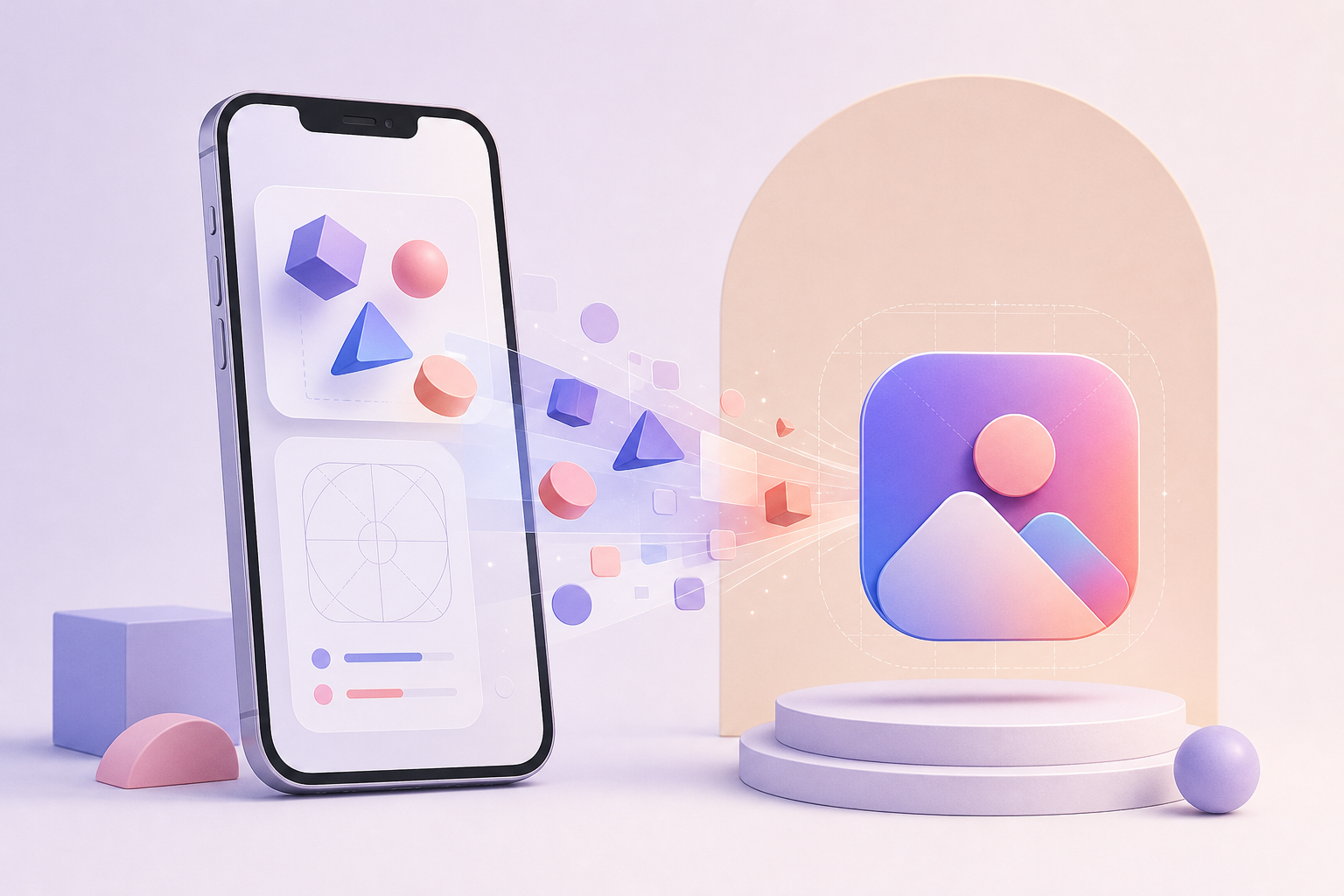
For years, turning a software concept into a functional app icon on a mobile home screen required navigating a rigid process: setting up development environments, signing digital packages, running USB cables for debugging, or paying for developer accounts with formal identity vetting. While large language models have dramatically reduced the friction of writing code, the deployment pipeline onto consumer smartphones remained a persistent barrier. Google is now bridging that gap by opening Google Play to purely personal creations.
Through an update across its mobile developer stack, the tech giant is enabling anyone using Google AI Studio to deploy AI-generated Android software directly to their devices, landing inside a secure, private partition within the Play Store client.
From Sideloading to the Personal Library
Until now, anyone crafting tools through vibe coding—directing an AI model through natural language instructions—was largely forced to deploy them as browser-based web apps or endure the cumbersome process of manually installing APK binaries. As reported by The Verge, Google's latest integration eliminates the need to plug devices into computers or configure developer switches: the workflow pushes compiled applications straight to the Google Play framework associated with the creator's standard Google account.
Inside the Play Store, users will find a dedicated Personal Library. Applications stored here remain entirely sequestered from the store's public catalog of three billion users: they do not appear in search results, lack public store listings, and can only be launched by their author. Google noted that restricted sharing with a small circle of family or team members will roll out in the near future, while still enforcing platform baseline safety reviews.
Shifting From «There’s an App for That» to «There’s an App for Me»
This update is more than a technical shortcut; it reflects an evolution in how software utility is conceptualized. According to Sam Bright, Google's vice president and general manager for Google Play and Developer Ecosystem, quoted by TechCrunch, the platform is purposefully transitioning from the legacy «there's an app for that» mindset to an era of «there's an app for me». The objective is to let individuals and small teams address bespoke, transient workflows through purpose-built micro-apps without having to wait for mass-market commercial solutions.
For projects that mature beyond private utility, Google has introduced an on-ramp program. Creators will be able to upgrade their builds into public catalog releases, undergoing standard Trust & Safety audits and enterprise developer verification.
An AI-Infused Overhaul for the App Store
Private app hosting is part of a wider AI transformation reshaping Google's storefront. As detailed by Ars Technica, the company is expanding Ask Play, its in-store conversational assistant that can now generate side-by-side comparison matrices between competing applications. Concurrently, Google unveiled Game Finder, an engine leveraging usage signals across 1.2 billion Android gaming profiles to map an individual's Gamer DNA and recommend titles matching their preferred mechanics.
The personal app deployment feature launches initially in the United States for users aged 18 and older, with broader international availability slated for subsequent updates.
Mocchi's take
Lowering the deployment barrier for AI-generated code shifts the core value of software engineering away from raw code writing toward architecture, lifecycle governance, and data security. For enterprises and agile teams, this capability unlocks immense potential to prototype internal operational utilities in hours, validating workflows in real-world scenarios without administrative friction. However, whenever personal micro-apps interface with critical infrastructure or corporate data, the line between innovation and unmanaged shadow IT becomes paper-thin: disciplined architectural validation, API compliance, and dependable systems integration remain irreplaceable requirements that no AI prompt can bypass on its own.